
Vorboss launches Simply Connected to simplify connectivity, IT and cybersecurity management for London businesses


Vorboss Wins Best Enterprise ISP 2024 at the ISPA Awards
We’re delighted to announce that Vorboss has been voted Best Enterprise ISP at the ISPA Awards! This recognition highlights our unwavering commitment to delivering exceptional connectivity solutions that enable businesses to thrive in an ever-evolving digital landscape.
The ISPA Awards celebrate excellence across the UK’s internet industry, and winning the Best Enterprise ISP category is a testament to our team’s dedication to innovation and reliability. From supporting businesses with high-performance connectivity to helping them achieve their goals with confidence, we’re proud to be at the forefront of modernising the internet industry.
We were also pleased to receive the award for Best Diversity, Equity & Inclusion, reflecting our ongoing efforts to foster an inclusive environment both within our company and across the wider tech sector.
Thank you to the ISPA for this recognition and to all our partners and customers for being part of the journey. Together, we’re shaping the future of connectivity.

Why wouldn’t we have a diverse workforce? Why shouldn’t inclusivity be the goal of the telecoms industry?
We’ve published our Diversity, Equity & Inclusion Strategy, and a core part of that is our commitment to reach gender parity across the company by 2028.
A major step towards achieving this breakthrough for the telecoms industry will be our commitment to reach 50/50 representation within technical and engineering positions by 2027. We’re currently at more than a third representation of women in those roles.
That puts us ahead of others in the telecommunications industry thanks to creating an inclusive culture where everyone can thrive.
Inclusion wasn’t an afterthought for us – we aimed for an inclusive approach and a diverse workforce right from the start.
And diversity isn’t limited to gender, so our policies are focused on ensuring inclusion for all people from all walks of life – and particularly those that have long been excluded from our industry.
Diversity works. It works for us, and it’s essential if the telecom industry is going to keep working.

By Rikshita Khela, Chief People Officer.

According to our Reliability and Compensation Report, authored by Assembly Research, the UK economy lost £17.6 billion in economic output in the past year due to fixed business connectivity outages.
Billions of pounds were wasted. It's a sobering figure.
How do you, as a business, guard yourself against this?
By getting to know your internet provider's service level agreement (SLA), and what it really means.
A transparent SLA lets you gauge how robust a provider's infrastructure is. The more generous the SLA, the more confidence a provider has in their network capability and reliability. It also guarantees that you will be compensated if downtime occurs.
So, what should you expect to see in the small print? Let's explore the world of SLAs.
What is an SLA?

An SLA, which stands for Service Level Agreement, is a contract that outlines and defines the type of service you can expect from your business internet provider.
It should lay out how they measure your service and what compensation they will give you if they do not deliver the promised service level.
We all know reliable connectivity is paramount to your business’ internal and external functions, so SLAs are very important. They allow you to mitigate some of the impact of connectivity outages, but more importantly they serve as an indicator of the quality of the infrastructure you rely on. By scrutinising the terms, you can make informed decisions, ensuring that you choose a service that aligns with your demands.
Many businesses are in the dark
There’s low awareness surrounding business internet providers’ SLAs—and that’s an issue.
Our research finds that almost a quarter (23%) of UK fixed business connectivity customers were unsure whether their contracts even included SLAs or SLGs.
Among those familiar with their SLA, 21% didn't know if their contract specified compensation arrangements if certain service quality levels weren’t met.
If you're in the dark about your SLA, your business could be vulnerable.
Commitment to high levels of compensation from providers acts as motivation to technical teams to pre-empt issues, therefore fostering a culture of continuous improvement.
The good news is you can request an SLA from your business internet service provider (ISP) if they haven't issued you one (or you haven't seen one).
The economic toll of outages

Consistent connectivity is not a luxury.
Ofcom finds that 83% of small and medium-sized enterprises (SMEs) consider communications services fundamental to their business, so much so they could not function without them.
60% of companies in London reported one or more service losses over the past year, with 28% experiencing at least three outages.
Our analysis reveals that over the last year, the average loss of economic output to London businesses as a result of internet outages was £18,620.
This equates to an average 314 lost hours of productivity (nearly 40 working days) per London business.
Staggering numbers to swallow.
This highlights the importance of transparency in contractual terms, as well as auto compensation. Businesses should not be left with minimal or no compensation if the worst occurs.
As things stand, the case is clear: businesses across the UK are losing out to connectivity outages.
Don’t leave money on the table
Despite the average UK business losing over £11,000 in economic output due to connectivity outages in the past year, 61% of UK businesses surveyed reported that they did not receive compensation from their ISP.
For those that didn’t ask for compensation, the main reasons given were that they believed it was not worth the time and effort or they didn’t expect to get compensation.
Only around a third of businesses surveyed reported receiving any compensation for connectivity outages in the past year.
If only they knew it could be a seamless and automatic process.
As a result of our findings, we’ve urged Ofcom to introduce an automatic compensation scheme for fixed business connectivity providers; we want this to become the standard.
Why we love SLAs

Business internet providers can hold themselves to account by including automatic compensation clauses in their SLAs. This indicates confidence in their infrastructure and a commitment to their customers.
This is how we use SLAs at Vorboss:
- To highlight our confidence in our network
- To ensure we compensate our customers fairly and automatically if outages occur
- To establish clear expectations between our customers and us (guaranteed uptime, response times, and compensation)
We’re raising the bar by providing the most competitive SLAs in the industry, automatically compensating businesses after just 4 minutes of downtime.
SLAs should be transparent and include automatic compensation to give customers greater trust in their providers—and encourage providers to improve service quality.
Vorboss's leased line SLAs
Putting our money, where our mouth is...
Top tips for managing your business internet SLA
- Read your SLA carefully, whether it’s an existing contract or a new one.
- Clarify anything unclear with your provider.
- Request a robust SLA if you don’t have one or need stronger protection.
- Check for automatic compensation and claim it if outages occur.
- Ensure every SLA has a clear benefit to safeguard your business.

In today's digital world, unreliable business internet connections are costing businesses and damaging the UK economy.
Our recent Reliability and Compensation Report, authored by Assembly Research, using data from the ONS and a survey conducted by YouGov, revealed that: 51% of UK fixed business connectivity customers experienced an outage in the past year, but 61% of those affected never received compensation.
Your business internet service provider (ISP) should make promises (in the form of a robust and transparent Service Level Agreement (SLA)) about keeping your business connected.
If they won’t make contractual promises, that says a lot about their confidence in their network. Automatic compensation would hold them to account.
The reality of internet outages

Digital connectivity is a cornerstone of business operations, and the economic repercussions of poor connectivity are very real.
19% of businesses with a business internet contract experienced more than three outages in the past year.
Overall, the UK economy lost £17.6 billion due to fixed business connectivity outages in the past year, with London businesses alone losing £5.7 billion.
Even brief outages that might have been tolerated ten years ago significantly impact productivity today. We’re more reliant on connectivity than ever before. And that’s only going to increase.
Tim Creswick, Founder and CEO of Vorboss, says:
“ISPs should all be incentivised to compete on quality – that would force an uplift in network performance, and in turn drive a much-needed economic boost.”
The problem with getting money back
Even though connectivity outages are common, not many businesses receive compensation.
Only 35% of UK fixed business connectivity customers who experienced an outage in the last twelve months received compensation.
Based on a sample of current tariffs, a meagre average of only £7.53 in direct financial compensation would have been available for the average outage time.
Businesses depend on the internet for everything from internal functions, like cloud-based services, to external interactions with suppliers and customers, so it’s critical they can trust their internet to work.
Especially as our demands on internet infrastructure increase.
The power of the SLA

Many businesses are not aware of the promises—if any —that their internet provider has made, or what they should receive if there’s a problem.
23% of UK fixed business connectivity customers were unsure whether their contracts included SLAs, and 21% didn’t know if their contract specified compensation arrangements if certain service quality levels weren’t met.
This makes it hard for them to ask for money back when things go wrong and suggests that there's a significant change is needed in how internet providers talk to their business customers.
When asked why they hadn’t asked for compensation, 44% of UK fixed business connectivity customers believed the claim wasn't worth the time and effort.
34% didn't bother to ask because they didn’t expect to receive any compensation.
Customers should be the priority, and getting automatic compensation when things go wrong is one way to make sure they are treated fairly.
While being compensated for internet outages doesn't fully make up for lost productivity, clear promises and automatic money back when things go wrong are essential to ensure that networks are competing on quality. And they’re essential to enabling businesses to make an informed choice about the provider that’s best for them.
For detailed statistics and insights that can guide your decision-making, read the complete Reliability and Compensation Report.
2023 Vorboss Gender Pay Gap report
The gender pay gap is the difference between the average earnings of women and men across a workforce at a single point in time, expressed as a percentage of men’s earnings. It is not the same as equal pay, which refers to paying women and men the same wage for the same job.
The 2023 Vorboss Gender Pay Gap report highlights our commitment to equity, inclusion, and diversity in all business areas, including policies that encourage women to join and stay in our workforce. However, we recognise that the numbers produced by the gender pay gap alone don’t reflect the level of inclusivity and representation we aspire to achieve.
Our priority is achieving gender equality as a whole, and we have committed to reach gender parity across the company by 2028.
A highlight of the year was being recognised as one of the Sunday Times Best Places to Work in the UK and Best Places to Work for Women.
You can read the full 2023 gender pay gap report here.

Anniversaries are a time to appreciate the present, reflect on the past, and consider the future. As we celebrate another year at Vorboss, one word springs to mind when looking in the rear view mirror and the road ahead: upgrade.
We conceived Vorboss as an 'upgrade' to London's existing internet infrastructure and designed our network to be future-ready without the need for costly retrofits. By provisioning beyond peak capacity from the start, we could create a future-proofed network that didn't require constant updating to handle London's evolving data demands.
Get it right the first time

In the UK, there has long been a culture of under-provisioning. From public toilets and parking to railways and roads, we've historically adopted a 'just enough' mentality that delivers 'just enough' results.
But when the UK encounters usage peaks, its infrastructure creaks. Water systems dump sewage during periods of heavy rainfall. Railway stations close during spells of extreme weather. Energy suppliers promote off-peak use to avoid blackouts.
Whenever demand surpasses the average, there are calls to upgrade our ailing legacy systems. Just last month, the National Infrastructure Commission's five-yearly review made a series of recommendations to modernise Britain's energy, transport, and water networks to boost economic growth. The review had one overarching message: we need an upgrade.
However, large-scale infrastructure retrofits are tricky and expensive. They're a pain for the consumer. They're a headache for the utility provider. They're also wholly unnecessary if we do the project right the first time.
The Thames Barrier, for example, was designed to protect London from never-seen-before tides and huge storm surges. Commissioned in 1972 and finished ten years later, it has safeguarded London for the last 40 years without major works. Foresight in the 70s has helped a formerly flood-risked city grow into a global capital.
The same goes for tech infrastructure. In 2002, Amazon decided to revamp its computing infrastructure not just to handle its current internal IT demand but also its future growth. It moved away from unscalable computing hardware to cost-effective online data centres, effectively inventing cloud computing with the creation of Amazon Web Services in 2006. Initially designed for the support needs of its e-commerce arm, AWS generated $80 billion in revenue in 2022 and has powered the growth of thousands of businesses.
Getting it right the first time pays long-term dividends.
Designed with the future in mind

London is a 'global city' above ground—one of only two cities in the world (alongside New York) to be ranked Alpha ++ by the Globalization and World Cities Research Network for its integration and influence.
But under the streets, London is a city of ageing cables, ranking 60th worldwide for broadband speeds.
To be the world's greatest city, London needs reliable capacity that easily handles today's peak demands and tomorrow's emerging technologies. That's why, when designing our business-only fibre infrastructure, we planned a network that would always stay ahead of the upgrade cycle.
A network for the present and for posterity; one that didn't need patching up every few years or retrofitting for every new tech development.
It wasn't long ago when, as the first business network to offer 10Gbps business internet as a minimum, we were told that it was excessive bandwidth. But will it be excessive in 2025 as London's businesses harness the power and data demands of artificial intelligence? Will 100Gbps business internet be excessive when London's companies use quantum computing to revolutionise the world of work?
Between 2019 and 2023, peak traffic and internet bandwidth increased markedly (with compound annual growth rates of 30% and 28%, respectively). Those thinking 1Gbps is enough at the start of a three-year contract are quickly realising how much the goal posts move, and we're now seeing our competition playing catch up.
The end of unnecessary upgrades

London's businesses are used to operating with bandwidth limitations, so they’re always waiting for the next upgrade. But limitless bandwidth is available now.
With a future-ready network that provides 10Gbps as a minimum and scales to 100Gbps, businesses can stop thinking about bandwidth and start thinking about their business.
Just as unlimited mobile phone packages eradicated the costs of phone calls from our minds, 10Gbps connectivity will help businesses forget about the internet. No more glitchy video calls. No more buffering circles. No more costly upgrades.
As we look forward to the future, hopefully London can start forgetting about unnecessary upgrades, too. Be it improving public spaces or enhancing transport infrastructure, we should do it once, do it right.
By Tim Creswick
CEO and Founder of Vorboss
Latest from the press room
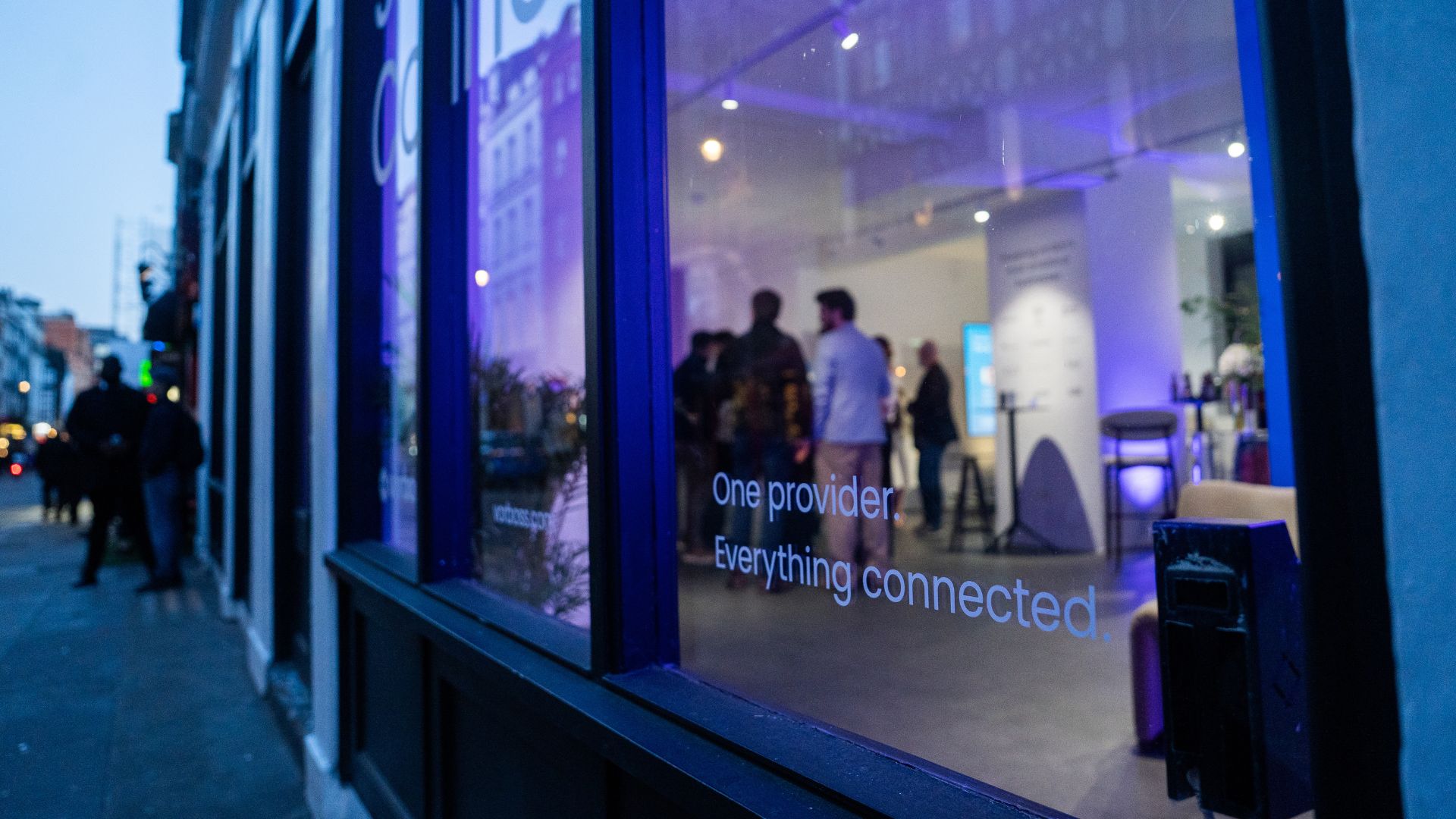
As companies grow, so does the technology behind them. Connectivity, IT and cybersecurity often end up spread across multiple suppliers, contracts and support models. Simply Connected brings it all together under one provider, making it easier to manage, easier to support, and clearer to understand costs.
At the heart of it is Vorboss’ own fibre network spanning over 750km across London, built, owned and operated in-house, with the same team designing, installing and managing the full setup end-to-end.
“Office technology has become overcomplicated,”
said Rhod Morgan, Chief Operations Officer at Vorboss.
“Many businesses have the right services on paper, but the experience feels disjointed. We wanted to remove the grey areas. Customers manage one relationship, have access to local support and receive one predictable monthly bill. The same team that builds the solution runs and supports it day-to-day.”
Simply Connected includes modular services that flex around each business and scale as it grows:
- Dedicated internet connectivity from Vorboss
- Fully managed office networks
- Managed IT and hardware provisioning
- Cybersecurity
- Ongoing support delivered by local London experts

Vorboss is powering the ambitions of London’s businesses with blazing-fast connectivity, managed IT, and serious cybersecurity. As we grow, we are focused on building a team that reflects the diversity of the customers we serve.
This year’s gender pay gap results mark a clear step forward, with both our median and mean pay gaps in favour of women, placing us ahead of the UK benchmark.
We recognise that lasting change depends on improving representation across roles and levels, and we are taking deliberate action to support this through inclusive hiring, clear career pathways and ongoing development. We are proud of the progress made and remain committed to achieving gender parity across Vorboss by 2028.
Read the full report here.

.avif)

.avif)
