
Vorboss launches Simply Connected to simplify connectivity, IT and cybersecurity management for London businesses

We go to a lot of effort working to protect our clients from online security threats. These could come in the form of key loggers that record you as you enter your login information, or DDoS (Distributed Denial of Service) attacks, which overwhelm a service with fake traffic, causing it to crash.
As part of our service, we always advise our clients to install software updates as soon as they become available, and support them through the process where they need help.
But if you visit a website that asks you to install an Adobe Flash update… STOP!
Flash itself was actually discontinued in 2020 and is no longer supported, so you should assume that any Flash update messages will be a security threat.
Currently, fake Flash messages are being used as a cover for a new ‘botnet’ campaign that installs a malicious browser extension, called Cloud9. If you use Google Chrome or Microsoft Edge you could be a target.
A botnet forms a group of infected devices that are controlled as one, without the owners’ knowledge, stealing sensitive data, sending spam, or performing DDoS attacks.
Worse still, the Cloud9 botnet will attempt to install additional malware to your device or network if it’s not stopped in time.
This type of attack is hard to spot because it looks like a genuine request, and just about anyone can become a target.
But there are things you can do to protect your business.
First, make everyone aware of the threat. If your people know what to look out for it’s less likely they’ll install the update in the first place.
Next, make sure everyone’s running the latest version of their browser and that security software is up to date.
Finally, enable Enhanced Protection in your browser’s Privacy and Security settings. This will give you a warning if you stumble upon a risky website or download.
We can help you keep your business protected from cyber criminals. Just get in touch.
LinkedIn is introducing new verification features over the coming months to help tackle fake accounts.
The business-focused social platform is a fantastic place to connect with like-minded businesspeople, and to find new employees, jobs and opportunities.
But thanks to this popularity, we’re seeing an increase in fake profiles, created by scammers for more sinister purposes.
Bot-like accounts have been cropping up all over the platform. They’ve been spamming people, tricking genuine profiles into downloading malware, and scamming them into giving away personal data.
LinkedIn holds a huge amount of information on each of its members, including their job history, contact details, professional interests and places of work – all valuable data that a determined criminal could put to use.
These fake accounts can be hard to spot. They look like real people (sometimes they’re AI-generated deepfake images), they seem to work for legitimate businesses, and the profiles have been carefully curated to look like the real deal.
LinkedIn is making changes over the coming months to help tackle these fake accounts, by way of an improved account authentication process.
Microsoft, which owns LinkedIn, is partnering with secure identity platform Clear to help verify accounts using work email addresses, government-issued ID, and a phone number.
It’s initially only being tested in the US, but if it’s a success, we expect we’ll see a wider rollout over the coming months.
Once the relevant information has been provided, accounts will receive a verification mark, like the ones introduced by Twitter. However, unlike Twitter, LinkedIn will be offering verification free of charge.
We’ll keep you updated when we know more, but in the meantime, if you need help keeping all your accounts secure, get in touch.
Do you inwardly (or outwardly) groan at the thought of yet another video call?
They’re now a normal part of our working lives, but it doesn’t make them any more exciting.
Good news: Microsoft is introducing Metaverse-style avatars, called Mesh avatars, to Teams.
You’ll be able to design your own avatar, personalising its appearance, accessories, and even choosing its reaction gestures.
According to Microsoft, it’s common for us to feel stressed and exhausted after spending a long time on camera. So using a virtual representation of yourself to reduce that stress is just one application for these new avatars.
Better still, you won’t need an expensive virtual reality headset. It’s all done using the Avatars app that’s available in the Microsoft Teams app store.
Big tech is investing billions on developing the Metaverse – a 3D virtual world that mimics the real world. Within it you’ll find many of the things you’re already familiar with – shops, workplaces, and even social spaces. Some are predicting it will become ‘the new internet’ in the coming years.
It might seem wild to imagine a virtual world like this – but 20 years ago it was hard to imagine routinely having a mobile video calls with someone on the other side of the world!
Times change, and it’s really exciting.
Right now the new avatar feature is only available in the Teams preview build, but we’ll get a general release date soon.
Will you encourage your people to use personalised avatars in Teams? Want to find more ways to make work more fun for your team? We can help. Get in touch!
Microsoft has become the leader of productivity over many decades. Can you imagine doing your day to day work without their software?
So it’s no surprise the tech giant recently conducted a major new survey into productivity in the workplace – and some of the results might surprise you.
Researchers surveyed 20,000 people working for businesses in 11 different countries.
They discovered the majority of bosses don’t believe their employees are as productive when working from home.
In fact, four out of five employers said they thought their people got less done when working remotely.
On the other hand, a massive 87% of staff felt they were MORE productive when working from home.
How is there such a big disconnect?
Microsoft boss, Satya Nadella blames what he calls “productivity paranoia”. What that means is a gap between what employers expect from their people, and what employees feel.
Maybe some bosses want to go back to the way we worked before 2020… but their people prefer the flexibility of today’s hybrid working.
There’s a lot to gain from less commuting and a better work/life balance.
We believe bosses need to communicate better with their people. Yes that’s about setting clear expectations and giving feedback if they feel people aren’t performing properly.
But it’s also important to make sure your team have the right tools and technology to allow them to get things done, no matter where they’re working.
Are their devices suitable for the job they’re doing? Do they have the right applications to communicate effectively and collaborate on projects?
Take the time to discuss the tools and technology you’re using with the people who use it every day.
You should also demonstrate how much you trust and value your people. In the long-term you’ll be rewarded with a loyal and productive team.
Need a hand finding the right tools and tech for your specific kind of business? We can help – just get in touch.
We all use our phones for a lot more than sending messages and making the occasional call.
And that means most of your staff are probably using their personal mobile for work now and then. Everyone does it.
The downside of this is it puts your business data at risk. If it can be accessed on a personal mobile and that device gets breached, that’s a risk.
That’s why the upcoming Android 13 is big news for businesses.
Google’s released more information about the new features on its latest operating system for mobile devices.
There are many features aimed at keeping business data safe and secure, while also helping your people maintain a good work/life balance.
We’re already able to create separate work and personal profiles on our Android devices. This new update makes managing these profiles even easier.
For example, your team can choose which profile they open their apps in.
Let’s say they had to watch a training video for work. They can set their phone to open it in the browser rather than the YouTube app, so it doesn’t affect their personal viewing history (and therefore suggested videos).
IT admins will benefit from more control over how business devices are used. They’ll also be able to monitor security logs for Wi-Fi, Bluetooth and passwords. And install security patches faster.
But it’s not all about the control that admins have over work-issued devices. Your employees will benefit from having their data encrypted while using their personal profile.
There will also be separate photo galleries for business and personal photos; an improved Lost Mode to lock and locate lost devices; and end-to-end encryption when using the new ChromeOS integration feature.
If you have a Google device you should already have access to Android 13. Other Android devices can expect to receive the update in the coming weeks.
If you want to talk through the best way to manage mobile devices for your business, get in touch.
You could be losing a full-time working week for every member of your team, thanks to the hassle of setting up video calls.
Video conferencing has revolutionised team meetings, and saves a huge amount of travel time. But we’re still not getting the full benefit from the new technology, according to new research.
Employees aged between 18 and 24 take up to 10 minutes to get set up for each remote meeting.
Times that by a typical five meetings a week, and it’s suddenly lost you 40 hours every year. That’s a whole working week of wasted time – a figure that gets even higher when you look at older age brackets.
It isn’t necessarily a result of differing technological know-how. The research shows that employees blame the tech itself for the loss of productivity.
Almost a third of people said they didn’t have the right tools for the job, and 23% even said they felt excluded from remote meetings thanks to inadequate tech.
Employees often feel that the audio-visual (AV) technology they’re provided for remote and hybrid working simply isn’t up to the job. That means poor microphones that don’t play ball, jittery webcams that interfere with communication, or the wrong choice of video calling software. All that makes meetings harder to set up and causes them to take longer than they should.
Despite this, businesses that offer remote and hybrid working are reaping the rewards in many other areas, including staff engagement and performance.
But there is a solution.
Assess your employees’ AV technology to make sure their tools are not slowing them down – new webcams and microphones could be a cheap and simple fix.
It’s also a good idea to ask your employees to find out where they see that problems are occurring. If they are finding your existing system difficult to use, or slow to log in to, you should consider alternative options or better training.
If this is something that’s slowing you down, we can help – just get in touch.
Latest from the press room
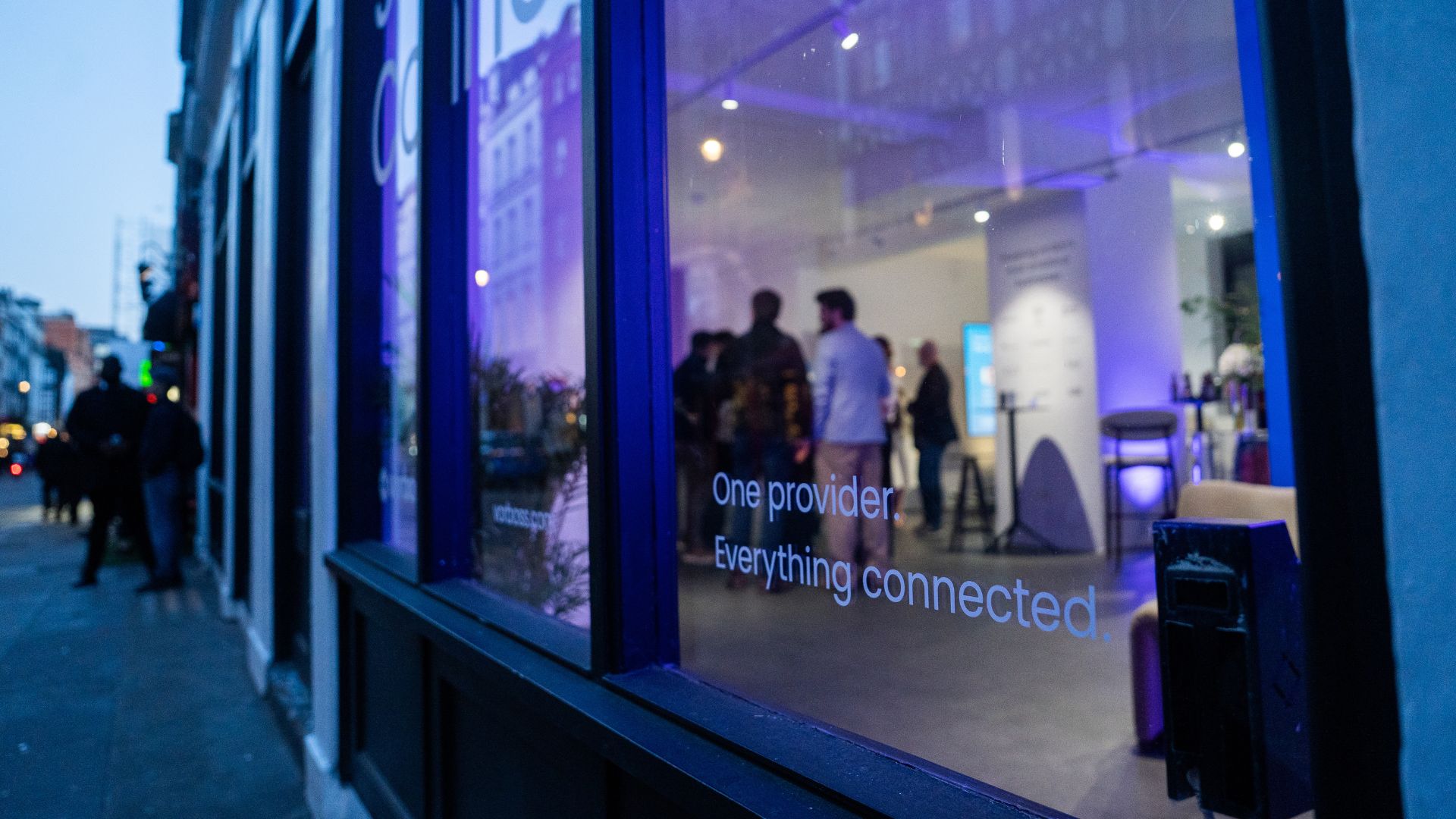
As companies grow, so does the technology behind them. Connectivity, IT and cybersecurity often end up spread across multiple suppliers, contracts and support models. Simply Connected brings it all together under one provider, making it easier to manage, easier to support, and clearer to understand costs.
At the heart of it is Vorboss’ own fibre network spanning over 750km across London, built, owned and operated in-house, with the same team designing, installing and managing the full setup end-to-end.
“Office technology has become overcomplicated,”
said Rhod Morgan, Chief Operations Officer at Vorboss.
“Many businesses have the right services on paper, but the experience feels disjointed. We wanted to remove the grey areas. Customers manage one relationship, have access to local support and receive one predictable monthly bill. The same team that builds the solution runs and supports it day-to-day.”
Simply Connected includes modular services that flex around each business and scale as it grows:
- Dedicated internet connectivity from Vorboss
- Fully managed office networks
- Managed IT and hardware provisioning
- Cybersecurity
- Ongoing support delivered by local London experts

Vorboss is powering the ambitions of London’s businesses with blazing-fast connectivity, managed IT, and serious cybersecurity. As we grow, we are focused on building a team that reflects the diversity of the customers we serve.
This year’s gender pay gap results mark a clear step forward, with both our median and mean pay gaps in favour of women, placing us ahead of the UK benchmark.
We recognise that lasting change depends on improving representation across roles and levels, and we are taking deliberate action to support this through inclusive hiring, clear career pathways and ongoing development. We are proud of the progress made and remain committed to achieving gender parity across Vorboss by 2028.
Read the full report here.

.avif)

.avif)
