
Vorboss launches Simply Connected to simplify connectivity, IT and cybersecurity management for London businesses

How secure do you think your passwords are? Do you believe that longer is always better? Well, we have some news for you. It's time for a serious talk about password security.
New research has revealed a sobering truth – even passwords that are 15 characters long can be compromised. Yes, you read that right. It's time to face the stark reality… length doesn't always mean strength.
The eight-character password reigns supreme as the most compromised length of the password. But don't breathe a sigh of relief if yours is longer. The 15-character password also appears in the top ten most compromised lengths.
You might ask, "How could this be?" The answer lies not only in the password length but also in the content of the password and whether you use the same password on multiple sites.
The most compromised eight-character password is none other than "password" itself, while the most compromised 15-character password is "Sym_newhireOEIE".
Doesn’t exactly feel secure.
It's not just about individual people. Businesses like yours are at high risk too. An alarming 86% of all cyber attacks start with stolen credentials. That's nearly nine out of ten attacks. Can you afford to be complacent?
Sure, longer passwords do offer more resistance to brute force cracking. An eight-character password can be cracked in five minutes, while a good 15-character one could take up to 37 million years if it’s not following any obvious pattern (i.e., it’s random and uses many types of character). Impressive, isn't it?
But remember, this is just one piece of the puzzle. Length alone won't save you from stolen credentials via phishing attacks.
Use a robust business password manager. Not only will it randomly generate long passwords for you, but it will also remember them and fill in the login box for you.
You should also use two factor authentication, where you generate a code on a separate device to prove it’s you. Even if cyber criminals crack your password, they still won’t be able to access your data.
If you need help keeping your business better protected, get in touch.
Microsoft is rolling out a brand-new version of Teams, its video conference, collaboration, and chat platform. We’re being promised a faster and easier way to work. And we all could use a bit of that, couldn't we?
The new Teams is like the superhero of apps for Windows and Mac. It's faster than a speeding bullet… well, at least twice as fast as the classic version. Plus, it's on a diet, using up to 50% less memory and disk space.
Microsoft went back to the drawing board to reimagine it, make it simpler and more flexible. Now Teams:
- Plays better with third-party apps
- Is happier calling phones outside of Teams
- Gets you into meetings quicker than you can say “not another meeting”
This pumped-up version of Teams uses some tech which allows it to share resources with your browser. That reduces how much memory and disk space it needs.
And the initial test results? Teams is twice as quick when loading the app, joining meetings, and switching chats and channels.
This isn’t just for businesses using Windows. Teams on Mac is also getting this performance boost.
Microsoft promises this update will be a game-changer for your productivity. They've improved the user interface, adding in a "mark all as read" feature in activity.
Plus, they're introducing Copilot, an AI assistant that can summarise key points from your chats and calls. Sort of like having your very own personal assistant without the coffee runs.
Are you ready to switch to the new and improved Teams? It's rolling out now. Look at the top left corner of your Teams app… if you see “try the new Teams”, then you can flick the switch and try it out.
If you need help with Teams for your business, get in touch.
Do you trust your employees with confidential information?
If you do, you’ll be surprised by this stat…
For a third of small and medium-sized business leaders, the answer is a resounding "no”!
Maybe it's because Jim from accounting still has his password on a Post-it note under his keyboard? Or perhaps it's because they’ve been burnt in the past?
Either way, it's clear that trust isn't enough when it comes to data security.
We believe the problem isn't your employees; it's the lack of good training and security measures.
So, what can you do about it?
Booking training for everyone is an easy first step. It empowers employees with the tools, techniques, and best practices they need to spot potential threats and take appropriate actions.
Think of it this way: well-trained staff pose less of a risk to the overall security of your business’s digital network. They become your first line of defence, helping to improve your company's security, and significantly reducing the risk of a breach.
Next, there are your security measures. Many companies admit they don’t have sufficient technology or checks to protect confidential information.
This is where we come in. We can help set up your company's system so that people can only access the data they're supposed to.
But our job wouldn’t stop there. We can also ensure that your company has adequate policies relating to information sharing, gaining access to confidential data, and what happens when an employee leaves. By doing this we help you create a more secure working environment for everyone.
Here's the truth: trust isn't enough in data security. But with the right training and security measures in place, you can transform your employees from potential security risks into your greatest assets.
Are you ready to move from a place of fear and mistrust to one of empowerment and confidence? Get in touch.
What if we told you your business could have its own personal assistant that's always ready to help, can answer virtually any question, and even change system settings on your devices?
It might sound too good to be true, but thanks to Microsoft's innovative new AI chatbot, Copilot, it's a reality.
Imagine this: You're busy. Your day is packed with meetings, and you need to find information or change a setting on your device quickly. What do you do?
Instead of panicking or wasting time you don’t have, just ask Copilot.
It’s the new kid on the block, replacing Cortana as Microsoft's go-to AI assistant. But what makes Copilot stand out from the crowd? Well, it’s built into the Microsoft Edge browser and integrated directly into Windows 11, allowing it to perform a broader range of tasks than ever before.
Ever tried to find a specific setting on your device and ended up lost in a sea of menus? With Copilot, you can ask it to change the setting for you.
But Copilot isn't part of the operating system. It’s more like a bonus feature of the Microsoft Edge browser that's been cleverly disguised to look like a native part of Windows 11.
When you summon Copilot, a sidebar appears from the right, revealing an interface identical to Bing Chat's web version. Here, you can set your conversation style and ask questions on virtually any topic. From "Make me a picture of a tropical beach with palm trees” to "Create a five-day itinerary for my business trip in March,” Copilot is ready to assist.
The best bit? Copilot understands context, meaning you can ask follow-up questions without repeating specific keywords. It's like having a conversation with a real person.
You can also use Copilot to get answers from any page on Microsoft Edge. Ask something like, "Give me a summary of the page I have opened on Microsoft Edge," and Copilot will scan the webpage content and respond accordingly.
So, what's the catch? Well, the preview of Copilot in the Windows 11 2023 update doesn't reflect the final product that Microsoft plans to roll out. But they're continually polishing the interface and will be adding more features in future updates.
While it might still be finding its feet, there's no denying its potential.
If you’d like a hand navigating Copilot, or any other productivity tools, get in touch.
Picture an AI-enhanced experience that streamlines your business communication and improves overall productivity to unprecedented levels.
Sounds like science fiction, right? But with Microsoft's latest announcement, this future is closer than you think.
Microsoft Teams is launching an ‘AI library’ that promises to revolutionise our Teams experience.
The goal?
To empower developers to integrate Large Language Models (LLMs) into their Teams apps. The most famous LLM right now is ChatGPT.
You might wonder how that will help your business. Well essentially, it could mean you have a sophisticated AI at your beck and call during your Teams meetings.
The AI library, rolling out right now, will provide developers with a suite of code functionalities making it easier for them to integrate LLMs into their apps. This means creating Bots, Message Extensions, and Adaptive Cards for more engaging conversational experiences will be a breeze.
Microsoft assures us that the AI library will also aid the seamless migration of existing Bots, Message Extensions, and Adaptive Cards functionalities into Teams.
Isn't this the same company that gave us the Copilot tool? Yep! In March 2023, Microsoft introduced GPT-4 integration across Microsoft 365 with its Copilot tool, which can whip up emails, compile reports, and, as Microsoft claimed, "rediscover the soul of work". Who knew AI could be so poetic?
And let's remember the recently unveiled tool which uses AI to generate meeting notes, suggest follow-up actions, and even provide timeline markers for instant access to relevant parts of a call.
Microsoft Teams is on a mission to redefine our experience with AI. This isn't just about making our lives easier; it's about unlocking new possibilities for productivity and efficiency. We can’t wait to see what the new AI library will bring.
Get in touch if you need help getting more from Teams across your business.
New research has uncovered an unexpected twist in the tale of cyber security risks – your tech-savvy younger employees may be your biggest vulnerability.
Shocked? Let's dive into the details.
More than 6,500 employees across the globe were surveyed, with an almost equal representation of demographics. The results were rather alarming.
The study found that younger office workers, those 40 or under, are more likely to disregard standard password safety guidelines. Can you believe that 34% admitted to using their birth dates as passwords, compared to just 19% of those over 40?
And it doesn't stop there.
The habit of using the same password across multiple devices was also more prevalent among younger workers, with 38% admitting to doing this.
And let's not even get started on phishing scams. A whopping 23% of the younger demographic didn't report the last phishing attempt they received. Their reasoning? "I didn't think it was important".
But surely they understand the gravity of security threats against businesses, right? Well, not quite.
While ransomware and phishing were acknowledged as critical threats by 23% and 22% of employees respectively, the overall attitude towards cyber security leaves much to be desired.
Here's the kicker: a staggering number of those surveyed revealed that their organisations did NOT provide any mandatory cyber security training.
From the US (30%) to the UK (17%), Netherlands (32%), Japan (35%), India (31%), Germany (22%), France (43%), Australia (29%) and China (65%) – the numbers speak for themselves.
So, are we really to blame our young workforce when it's clear that businesses aren't doing enough to equip their employees with the necessary cyber security skills?
It's high time we stopped treating cyber security as an afterthought and started investing in regular cyber awareness training for everyone in our businesses. Yes, EVERYONE. Not just the tech team or the executives but every single employee.
At the end of the day, it's not just about protecting your business; it's about creating a safer digital world for us all.
We can help you do that. Get in touch.
Latest from the press room
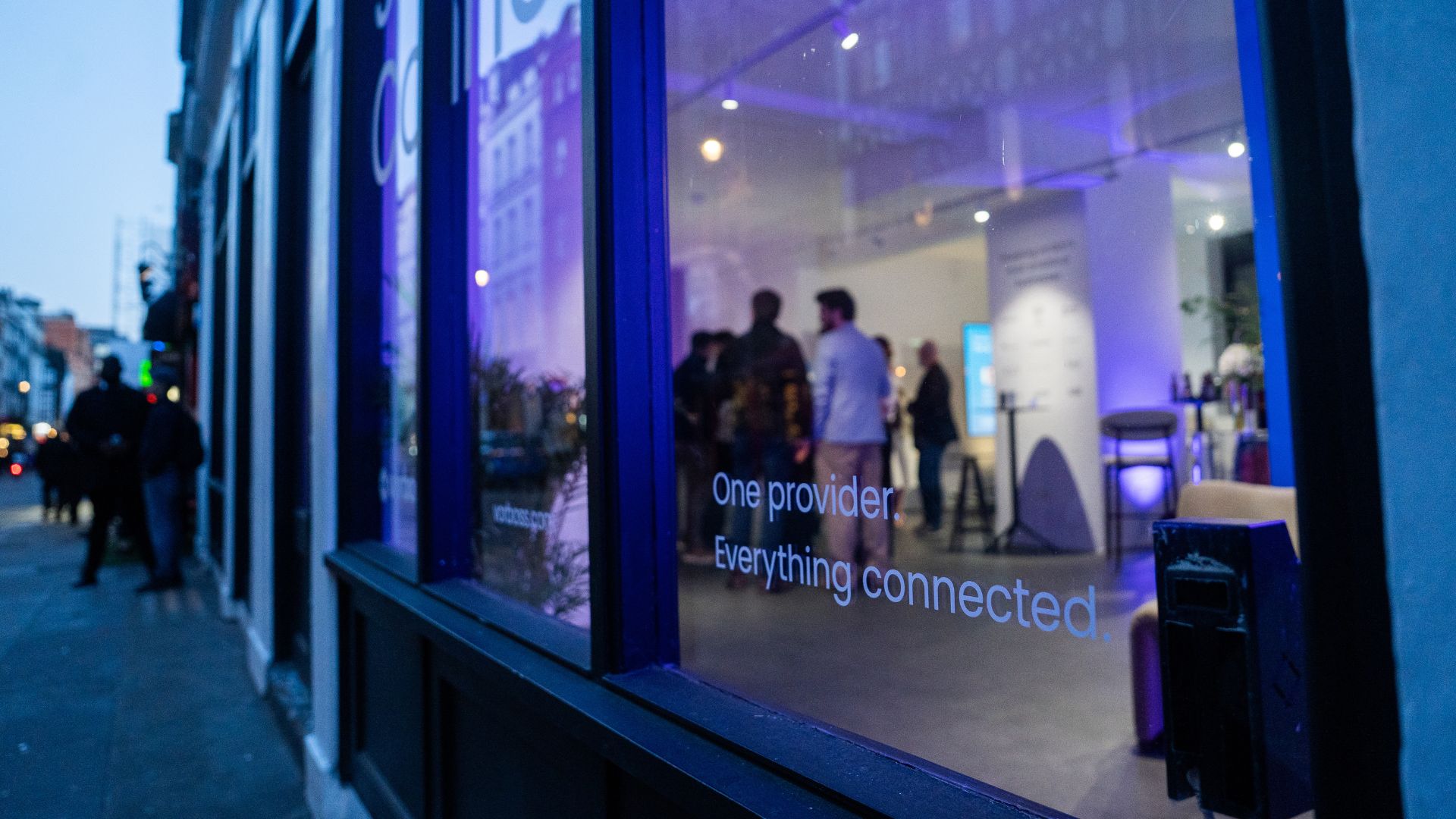
As companies grow, so does the technology behind them. Connectivity, IT and cybersecurity often end up spread across multiple suppliers, contracts and support models. Simply Connected brings it all together under one provider, making it easier to manage, easier to support, and clearer to understand costs.
At the heart of it is Vorboss’ own fibre network spanning over 750km across London, built, owned and operated in-house, with the same team designing, installing and managing the full setup end-to-end.
“Office technology has become overcomplicated,”
said Rhod Morgan, Chief Operations Officer at Vorboss.
“Many businesses have the right services on paper, but the experience feels disjointed. We wanted to remove the grey areas. Customers manage one relationship, have access to local support and receive one predictable monthly bill. The same team that builds the solution runs and supports it day-to-day.”
Simply Connected includes modular services that flex around each business and scale as it grows:
- Dedicated internet connectivity from Vorboss
- Fully managed office networks
- Managed IT and hardware provisioning
- Cybersecurity
- Ongoing support delivered by local London experts

Vorboss is powering the ambitions of London’s businesses with blazing-fast connectivity, managed IT, and serious cybersecurity. As we grow, we are focused on building a team that reflects the diversity of the customers we serve.
This year’s gender pay gap results mark a clear step forward, with both our median and mean pay gaps in favour of women, placing us ahead of the UK benchmark.
We recognise that lasting change depends on improving representation across roles and levels, and we are taking deliberate action to support this through inclusive hiring, clear career pathways and ongoing development. We are proud of the progress made and remain committed to achieving gender parity across Vorboss by 2028.
Read the full report here.

.avif)

.avif)
