
Vorboss launches Simply Connected to simplify connectivity, IT and cybersecurity management for London businesses

Cloud computing has quickly become a popular option for businesses that want to streamline their operations, reduce costs, and become more flexible.
But are you swayed by the idea that cloud services are automatically better for the environment? Could the need to do your bit ‘cloud’ your decision-making?
Sorry. Bad pun.
It’s true that cloud services have environmental benefits compared to using your own servers. These include reduced energy consumption and a smaller carbon footprint.
Yet you shouldn’t view the cloud as a “green solution” without fully understanding the environmental impact.
One consideration of using cloud services is the location of the data centres where servers are housed. Some providers have made commitments to use renewable energy, but it’s not a guarantee. It is essential to do your research and choose a provider that sources renewable energy and uses energy storage where possible.
When thinking about switching to the cloud, there are other benefits besides environmental sustainability. They include improved data security, ease of collaboration, and scalability as your business grows.
Another key advantage of cloud computing is data backup and recovery.
With all your data stored in the cloud, the risk of data loss due to equipment failure, damage, or theft is virtually eliminated. It means that in the event of an unforeseen disaster, like a fire or natural disaster, you can rest assured your data is safe and can be quickly recovered.
Cloud computing also enables better collaboration and communication, helping your team to work together more easily and efficiently, no matter where they’re working from. This can increase productivity and reduce your costs in comparison to maintaining traditional on-site systems.
Finally, cloud services provide better scalability as you grow, with the ability to increase storage and processing power as needed.
Can you see the benefits of cloud computing are huge? It’s why so many businesses have already ditched their servers.
If you’re considering migrating, get in touch – we can talk you through the process and what happens when.
The whole world is suddenly talking about Artificial Intelligence.
From Alexa in your kitchen, to Siri on your phone, AI is already all around us, but new names like ChatGPT, Dall-E, Jasper and more feel like they’ve blown up the internet.
These new concepts take things WAY further, helping us to write articles, search the web with natural conversation, generate images, create code, and introduce new ways to make our daily lives even easier.
But emerging technology nearly always launches in a blizzard of geek-speak before it settles into everyday life. Early PC users might remember the ‘DOS prompt’. And when did you ever have to ‘defrag’ your phone?
Experts believe that these new AI tools will become the building blocks of a whole new world of tech, redefining the way we interact with computers and machines.
So let’s help you decode some of the terms you’ll hear this year.
Chatbot Starting with the basics, a chatbot is an app that mimics human-to-human contact. Just type or speak normally, and the chatbot will respond the same way. ChatGPT is a chatbot. If you haven’t tried it out yet, give it a go.
Deep learning This is the technique that’s used to imitate the human brain, by learning from data. Current search tools and systems use pre-programmed algorithms to respond to requests. AI tools are trained on concepts and conversations in the real-world, and learn as they go to provide human-like responses.
Machine intelligence The umbrella term for machine learning, deep learning, and conventional algorithms. “Will machine intelligence surpass human ingenuity?”
Natural Language Understanding (NLU) helps machines understand the meaning of what we say, even if we make grammatical errors or speak with different regional accents.
Weak AI is the most common form of AI in use right now. Weak AI is non-sentient and typically focuses on a single or small range of activities – for instance writing, or repurposing video content. Strong AI, on the other hand has the goal of producing systems that are as intelligent and skilled as the human mind. Just not yet.
This is just the tip of the iceberg, but trust us – you’re going to be hearing a lot more about AI in the months and years to come.
If you’d like more help to understand how AI might form part of your business, just get in touch.
Your data is one of your most valuable business assets. Keeping it safe should be one of your main priorities. So if you don’t have much security in place, there’s a minimum standard you should be implementing, right now.
There are dozens of security solutions available that all perform different tasks – from preventing criminals gaining access, to recognising attacks in progress, and then limiting the damage that can be done. There’s no one-size-fits-all as every business has different priorities and different types of data to protect.
Here are three essentials that every business should put in place as a basic level of protection.
A firewall
A firewall monitors the internet traffic coming into and leaving your IT network. It acts as a wall between your network and the outside world. It’s your first line of defence against an intruder breaking in to your network.
A password manager for everyone in the business.
A password manager stores all your credentials securely, and can also generate nearly impossible-to-guess passwords for all your accounts and applications.
That’s useful against brute force attacks, where cyber criminals essentially try to force their way into your system by guessing the password. It also stops you writing down your passwords somewhere ‘safe’!
A VPN (Virtual Private Network)
A VPN is important for any remote or hybrid workers in your business.
It means your employees can access your network from wherever they’re working, without worrying that their online activity is being watched by a criminal.
VPNs make your browsing completely private, hiding your device and location details, and anything you download. If you or your employees regularly use public Wi-Fi – especially to access your network – a VPN is essential.
These are our absolute minimum recommendations.
The strongest security uses additional tools like Multi-Factor Authentication to prove the identity of all users, and antivirus software to deal with any intrusions.
These work together to create a multi-layered security shield to defend against threats on many fronts.
But it’s important you create a security plan that’s right for your specific business. It’s a good idea to seek some professional help.
Not everyone’s as excited about IT security as we are! But we definitely have a passion for it.
If we can help you, get in touch.
One of the many cool things about the new wave of Artificial Intelligence tools is their ability to sound convincingly human.
AI chatbots can be prompted to generate text that you’d never know was written by a robot. And they can keep producing it – quickly, and with minimal human intervention.
So it’s no surprise that cyber criminals have been using AI chatbots to try to make their own lives easier.
Police have identified the three main ways crooks have found to use the chatbot for malicious reasons.
Better phishing emails
Until now, terrible spelling and grammar have made it easy to spot many phishing emails. These are intended to trick you into clicking a link to download malware or steal information. AI-written text is way harder to spot, simply because it isn’t
riddled with mistakes.
Worse, criminals can make every phishing email they send unique, making it harder for spam filters to spot potentially dangerous content.
Spreading misinformation
“Write me ten social media posts that accuse the CEO of the Acme Corporation of having an affair. Mention the following news outlets”. Spreading misinformation and disinformation may not seem like an immediate threat to you, but it could lead to your employees falling for scams, clicking malware links, or even damage the reputation of your business or members of your team.
Creating malicious code
AI can already write pretty good computer code and is getting better all the time. Criminals could use it to create malware.
It’s not the software’s fault – it’s just doing what it’s told – but until there’s a reliable way for the AI creators to safeguard against this, it remains a potential threat.
The creators of AI tools are not the ones responsible for criminals taking advantage of their powerful software. ChatGPT creator OpenAI, for example, is working to prevent its tools from being used maliciously.
What this does show is the need to stay one step ahead of the cyber crooks in everything we do. That’s why we work so hard with our clients to keep them protected from criminal threats, and informed about what’s coming next.
If you’re concerned about your people falling for increasingly sophisticated scams, be sure to keep them updated about how the scams work and what to look out for.
If you need help with that, get in touch.
We’re fickle creatures.
Windows 11 still feels like a new toy, yet we’ve already heard (reliable) speculation about Windows 12 arriving as soon as next year. And now it’s all we can think about!
What will it look like?
What improvements will we see?
Will there be new features?
We can’t answer these questions with certainty just yet, but there are whispers of new features that could be big news for businesses.
Three in particular have got us excited.
First (and probably most obvious) is the inclusion of more AI functionality. From automation to chatbots, AI has exploded in recent months. It just makes sense that Microsoft will harness this power to bring us a more impressive operating system.
We’re likely to see better AI analysis of our content, and prompts to help us begin projects or choose apps to help get things done. It will also help us speed up what we’re doing with improved intuition for what we’ll do next.
We do know that Microsoft wants to bring us faster updates and better security.
It’s likely things will be split into different sections rather than having the entire OS as a single entity as it stands today. That means updates to different elements will be able to run in the background while you continue to work, and different people may be granted access to each partition for improved security.
Microsoft also intends to make the Windows 12 experience more modular. The benefit of creating different components in this way is that higher-powered devices will get the maximum Windows experience, while lower-powered devices will still be able to do everything they need, running the Edge browser, Office tools, or web apps, for instance.
Some of these features may be reliant on dedicated hardware and upgraded equipment and we’re waiting for more announcements on that. As soon as we hear, you’ll be the first to know!
If you haven’t yet made the move to Windows 11, now’s a good time. Get in touch if you need any help or advice.
Microsoft is planning to enable Multi-Factor Authentication (MFA) directly in its Outlook app for many 365 business users.
MFA is a vital tool to help protect your online accounts from cyber criminals. It works by generating a second, single-use passcode every time you log into an account. It’s usually sent to an authenticator app on your phone that you have to download and set up first.
Security codes can also be sent via SMS text message, by a phone call, or you might be given a special USB key to plug into your computer.
The process is often made quicker by using a biometric login like your fingerprint or face ID. It’s a minor chore, but the protection it offers far outweighs the couple of extra seconds it takes to access your account.
Microsoft isn’t so sure about those extra seconds, though. If the tech giant can save you that time, it’s going to do it. That’s why it’s looking to streamline MFA for Microsoft 365 business accounts.
It’s rolling out the improvement by building MFA directly into the Outlook app in a feature called Authenticator Lite. Until now, it’s relied on a separate authenticator app or sending login codes.
There’s no news yet for those of us who want faster authentication on our personal PCs. If Microsoft does announce plans to make this feature available to more hardware or operating systems, we’ll update you with any news.
If you don’t already use MFA for your apps and online accounts, we recommend that all businesses implement it as soon as possible. The additional security it offers protects against the vast majority of today’s cyber threats.
For more help and advice about implementing MFA or getting the best from Microsoft 365, just get in touch.
Latest from the press room
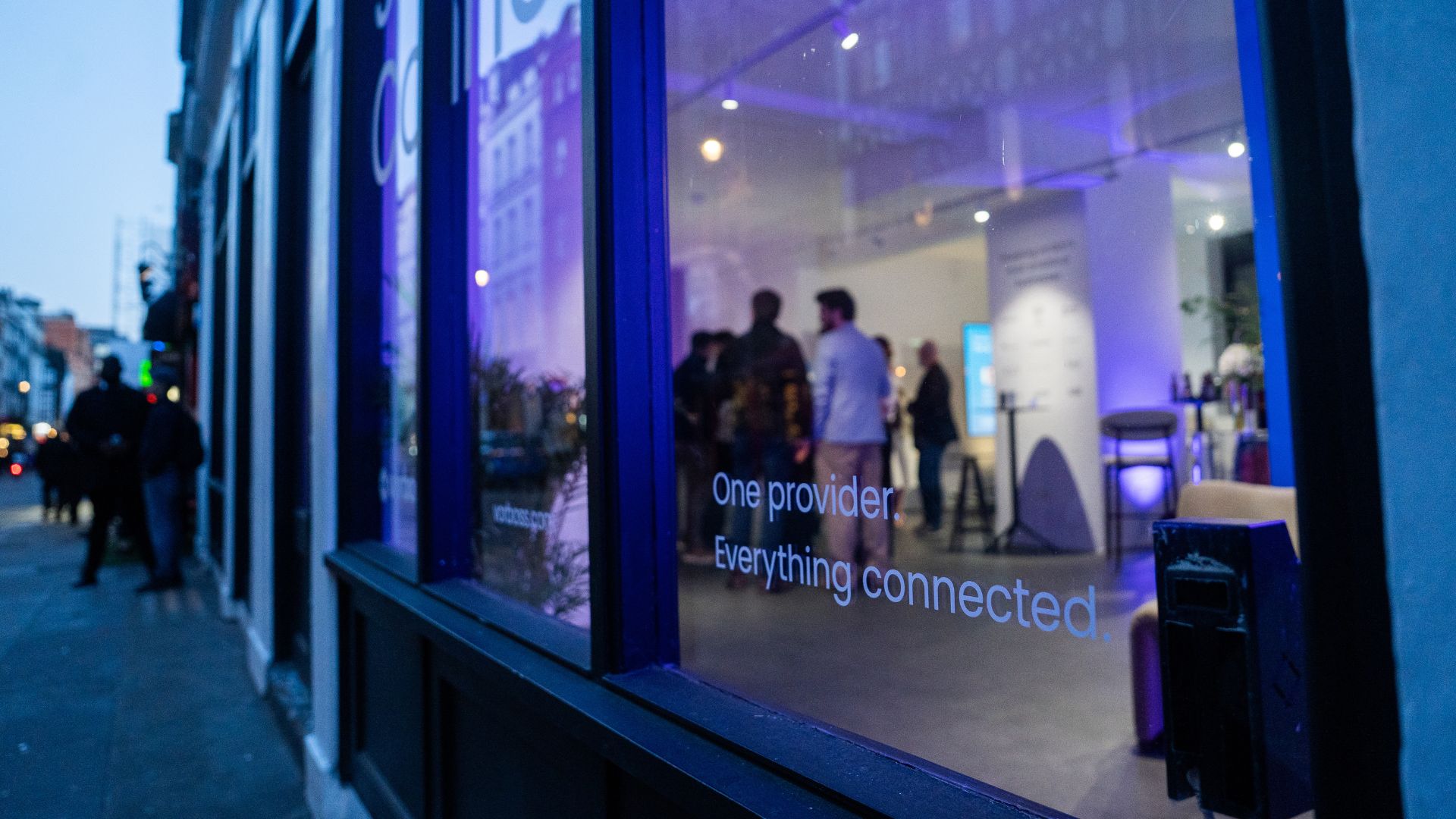
As companies grow, so does the technology behind them. Connectivity, IT and cybersecurity often end up spread across multiple suppliers, contracts and support models. Simply Connected brings it all together under one provider, making it easier to manage, easier to support, and clearer to understand costs.
At the heart of it is Vorboss’ own fibre network spanning over 750km across London, built, owned and operated in-house, with the same team designing, installing and managing the full setup end-to-end.
“Office technology has become overcomplicated,”
said Rhod Morgan, Chief Operations Officer at Vorboss.
“Many businesses have the right services on paper, but the experience feels disjointed. We wanted to remove the grey areas. Customers manage one relationship, have access to local support and receive one predictable monthly bill. The same team that builds the solution runs and supports it day-to-day.”
Simply Connected includes modular services that flex around each business and scale as it grows:
- Dedicated internet connectivity from Vorboss
- Fully managed office networks
- Managed IT and hardware provisioning
- Cybersecurity
- Ongoing support delivered by local London experts

Vorboss is powering the ambitions of London’s businesses with blazing-fast connectivity, managed IT, and serious cybersecurity. As we grow, we are focused on building a team that reflects the diversity of the customers we serve.
This year’s gender pay gap results mark a clear step forward, with both our median and mean pay gaps in favour of women, placing us ahead of the UK benchmark.
We recognise that lasting change depends on improving representation across roles and levels, and we are taking deliberate action to support this through inclusive hiring, clear career pathways and ongoing development. We are proud of the progress made and remain committed to achieving gender parity across Vorboss by 2028.
Read the full report here.

.avif)

.avif)
