
Vorboss launches Simply Connected to simplify connectivity, IT and cybersecurity management for London businesses

If you employ anyone aged between 16 and 19, you need to pay special attention to the cyber security training you’re giving your team.
A new study has revealed that a host of worrying online behaviour has become almost normalised among many young people. And much of this activity is illegal.
We’re not talking serious cyber crime such as ransomware attacks or stealing data.
But one in three 16 to 19-year-olds have admitted to digital piracy; and a quarter have tracked or trolled someone online.
Most of these behaviours may not directly affect your business. But some are so commonplace that too many young people view them as a part of everyday life.
That’s not something you want them bringing to work.
Casual software piracy or illegal downloads on devices used for work could open the door to a massive security breach.
The answer is simple: Hold cyber security training for all your employees on a regular basis.
This training should:
- Highlight the impact of bad online behaviour and potential for security breaches
- Help everyone understand how this kind of activity can harm people – and your business
- Make everyone aware of the scams and attacks that your business is vulnerable to, as well as the part they play in keeping everyone protected
- Make the consequences clear for anyone found to be engaging in this behaviour
If this is something you need some expert help with, it’s what we do.
Get in touch.
AI chatbots have taken the world by storm in recent months. We’ve been having fun asking ChatGPT questions, trying to find out how much of our jobs it can do, and even getting it to tell us jokes.
But while lots of people have been having fun, cyber criminals have been powering ahead and finding ways to use AI for more sinister purposes.
They’ve worked out that AI can make their phishing scams harder to detect – and that makes them more successful.
Our advice has always been to be cautious with emails. Read them carefully. Look out for spelling mistakes and grammatical errors. Make sure it’s the real deal before clicking any links.
And that’s still excellent advice.
But ironically, the phishing emails generated by a chatbot feel more human than ever before – which puts you and your people at greater risk of falling for a scam. So we all need to be even more careful.
Crooks are using AI to generate unique variations of the same phishing lure. They’re using it to eradicate spelling and grammar mistakes, and even to create entire email threads to make the scam more plausible.
Security tools to detect messages written by AI are in development, but they’re still a way off.
That means you need to be extra cautious when opening emails – especially ones you’re not expecting. Always check the address the message is sent from, and double-check with the sender (not by replying to the email!) if you have even the smallest doubt.
If you need further advice or team training about phishing scams, just get in touch!
Our phones are a goldmine of private information. Just think of all the financial details, personal messages, banking apps, photos and contact information that live behind that little glass screen.
And if your team use phones for work, they’ll often have access straight into company systems – email, contact lists, network access, file systems. So if they’re not kept as secure as any other device in your workplace, they can become a gaping hole in your cyber security.
Criminals know this, of course, which is why they target us through our phones just as much as they do through our networks and servers.
But cyber crime isn’t the only concern. Just losing your phone, or having it stolen, can put your data at huge risk.
So, whether you issue company smartphones, or your employees use their own, you should make sure everyone implements some simple security steps to protect your data and avoid disaster.
Start with making sure your people set up a PIN and a biometric login (like a fingerprint or face scan) to open the device.
Only install apps from trusted sources to make sure you’re using genuine software.
And enable Multi-Factor Authentication on all apps that store even a small amount of sensitive data.
Be careful about where you connect to Wi-Fi. If you work remotely or often connect to public networks, consider using a VPN – a Virtual Private Network – to add another layer of security. You never know who’s monitoring traffic on a public network.
Finally, ALWAYS make sure your phone is running the latest version of its operating software, and keep all apps up to date.
Smartphones have changed so much about the way we live – at home, and at work – but it’s too easy to take them for granted. And that could be a costly mistake.
If you need help to keep your smartphones safe, just get in touch.
Have you ever tried to buy tickets for a huge event and found that the seller’s website has collapsed under the weight of thousands of people all trying to do the same thing at the same time?
The ticket site falls over – usually temporarily – because the server is overloaded with traffic it doesn’t have the capacity for.
Criminal Distributed Denial of Service attacks – DDoS, for short – exploit the same principle.
When a DDoS attack targets a business, it floods it with internet traffic in an attempt to overwhelm the system and force it to fail.
This results in the business and its customers being unable to access services. That may trigger a temporary failure, or it could be more serious. Last year, the average DDoS attack lasted 50 minutes.
That may not sound like a long time, but it’s enough to create angry customers, or to bring business to a grinding halt. And downtime can be costly.
The really bad news is that DDoS attacks are not only lasting longer, but they’re becoming bigger, more sophisticated and more common.
Recently, the biggest ever reported DDoS attack was reportedly blocked. At its peak, it sent 71 million requests per SECOND to its target’s servers. Prior to that, the biggest reported incident stood at 46 million requests per second.
Worse still, more businesses are reporting being targeted by DDoS attacks where criminals are demanding huge ransoms to stop the attack.
What does this mean for you?
It’s important you check all your security measures are up-to-date and working as they should be. Are your firewalls up to the task, with DDoS monitoring and prevention tools set up? And is your team fully aware of the importance of staying vigilant?
We can help make sure your business stays protected. Just get in touch.
To protect your home from an intruder you make sure your doors and windows are all locked and secured. You might go further: build a fence around the perimeter, perhaps even get an angry-looking dog to stand guard.
But there’s no point going to all that effort if someone’s already broken in and set up camp in the basement.
Yet that’s the security policy of thousands of big businesses trying to protect their data from cyber criminals.
They do many of the right things. They invest in security software. They take a strong, multi-layered approach to security – including all the things we recommend, like multi-factor authentication, encryption, reliable backup systems and staff training.
But they don’t pay enough attention to detection and response. That involves constantly scanning systems for any sign that a crook may have gained entry somewhere, and having a process to stop an attack in its tracks.
A new study shows that only a third of businesses place detection as their main priority, while two thirds say prevention is their primary focus.
That means, they could be building 10-foot walls around their systems with intruders already inside.
In-house security teams might be super-confident in the security measures they’ve put in place. But the data suggests that they’re being too complacent. The study reveals that more than eight in ten businesses experienced more than one data breach last year – even with good security in place.
Criminals are constantly finding ways to evade security. That tells us that we need to take a rounded approach, with strong prevention AND detection policies providing the best protection against today’s determined criminals.
If you need world-class security, get in touch today!
If we talk about ‘bots’ you’d be forgiven for thinking of the amazing AI chatbots that have been all over the news lately.
But this isn’t a good news story. Bots are just automated programs, and bot malware is a worrying new security risk you need to defend your business against.
Malware bots are particularly dangerous because they steal whole user profiles – that’s a complete snapshot of your ID and settings. This potentially allows cyber crooks to bypass strong security measures like Multi-Factor Authentication (MFA).
Usually, if a criminal steals your username and password, they still can’t access your account because they don’t have access to your MFA authentication method. But with your whole profile available to them, using your cookies and device configurations, they can trick security systems and effectively switch off MFA.
Once profile information is stolen, it’s sold on the dark web for as little as £5.
And it’s not even super-sophisticated cyber criminals deploying this technique. Just about anyone can obtain your details and use them for phishing emails, scams, and other criminal activity.
Since 2018, 5 million people have had 26.6 million usernames and passwords stolen, giving access to accounts including Microsoft, Google, and Facebook.
All this means there are things you need to do – right now – to keep your profiles and your business protected from bot malware.
- Update your antivirus software and keep it on at all times.
- Use a password manager and Multi-Factor Authentication to keep your login credentials safer
- And encrypt all your files so that, if anyone does access your profile, there’s very little to steal.
These are the things we help our clients with every day. If we can help you, just get in touch.
Latest from the press room
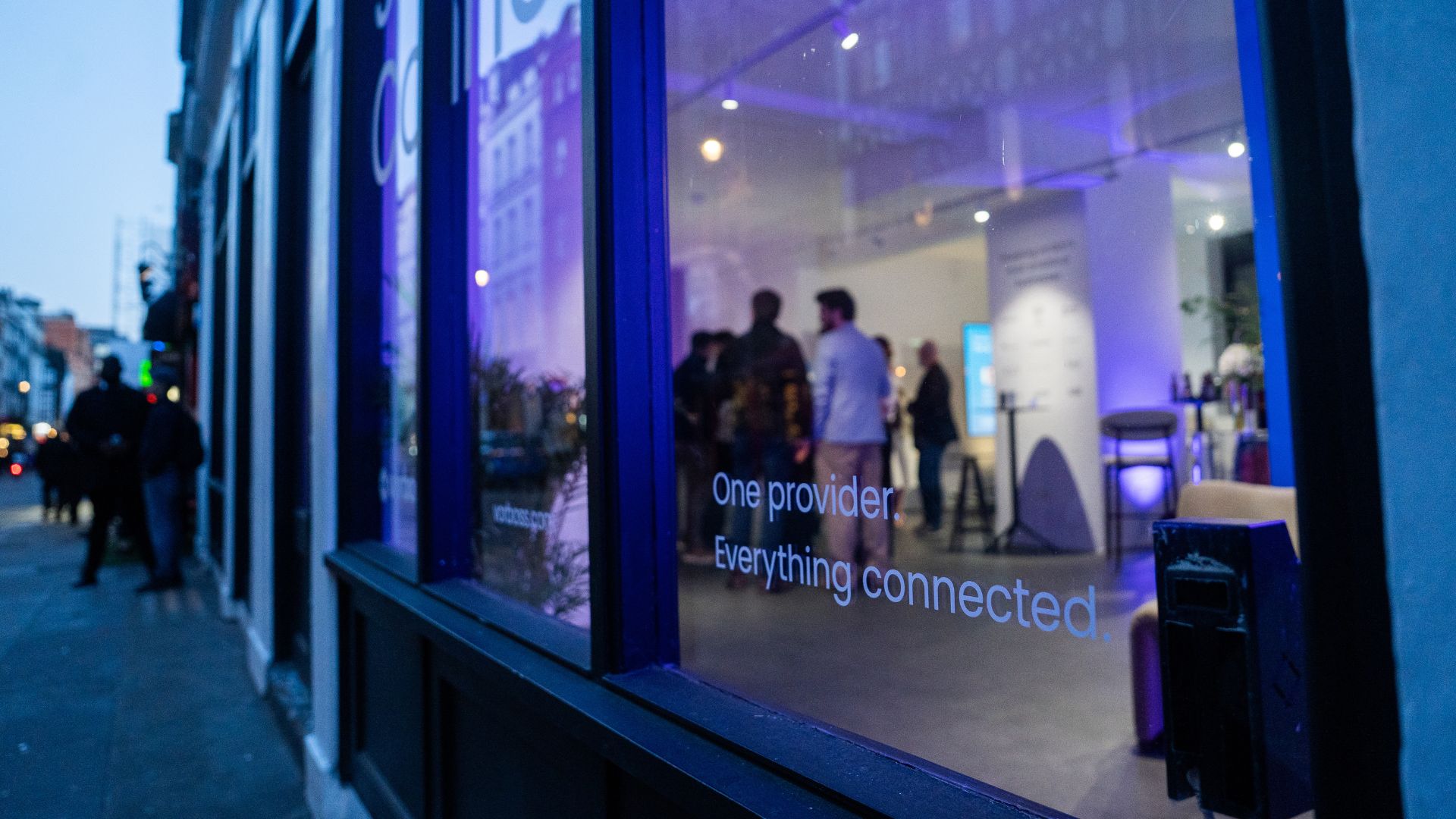
As companies grow, so does the technology behind them. Connectivity, IT and cybersecurity often end up spread across multiple suppliers, contracts and support models. Simply Connected brings it all together under one provider, making it easier to manage, easier to support, and clearer to understand costs.
At the heart of it is Vorboss’ own fibre network spanning over 750km across London, built, owned and operated in-house, with the same team designing, installing and managing the full setup end-to-end.
“Office technology has become overcomplicated,”
said Rhod Morgan, Chief Operations Officer at Vorboss.
“Many businesses have the right services on paper, but the experience feels disjointed. We wanted to remove the grey areas. Customers manage one relationship, have access to local support and receive one predictable monthly bill. The same team that builds the solution runs and supports it day-to-day.”
Simply Connected includes modular services that flex around each business and scale as it grows:
- Dedicated internet connectivity from Vorboss
- Fully managed office networks
- Managed IT and hardware provisioning
- Cybersecurity
- Ongoing support delivered by local London experts

Vorboss is powering the ambitions of London’s businesses with blazing-fast connectivity, managed IT, and serious cybersecurity. As we grow, we are focused on building a team that reflects the diversity of the customers we serve.
This year’s gender pay gap results mark a clear step forward, with both our median and mean pay gaps in favour of women, placing us ahead of the UK benchmark.
We recognise that lasting change depends on improving representation across roles and levels, and we are taking deliberate action to support this through inclusive hiring, clear career pathways and ongoing development. We are proud of the progress made and remain committed to achieving gender parity across Vorboss by 2028.
Read the full report here.

.avif)

.avif)
